In 2011, venture capitalist Marc Andreessen wrote a famous article in The Wall Street Journal titled “Why Software Is Eating the World.” His argument was simple but powerful: every industry would eventually be transformed by software. At the time, this sounded bold. Today, it feels obvious. Banks became mobile apps, retail moved to e-commerce, and entertainment shifted to streaming platforms. But a new shift is now emerging: AI is beginning to eat software itself. This does not mean software is disappearing. Instead, AI is transforming how software is built, how it works, and how people interact with it.
Before the 2000s, most companies were not software companies. Software was simply a supporting tool used by traditional businesses. However, companies that embraced software began dominating entire industries. Transportation is a good example. Taxi companies were disrupted by ride-hailing platforms such as Uber and Bolt . These companies did not own most of the vehicles used on their platforms, yet they controlled large parts of the transportation market through software. Retail followed a similar pattern. Physical stores once dominated shopping, but companies like Amazon and Alibaba Group built massive digital marketplaces powered almost entirely by software. Entertainment also transformed dramatically. Traditional television networks lost influence as streaming services such as Netflix and Spotify allowed users to access content instantly from anywhere in the world.
Across these industries, the same pattern appeared repeatedly: an industry became digitized, a software platform emerged, and that platform gained dominance. Software did not merely assist industries; it gradually became the industry itself. This was the core idea behind the statement that software was eating the world.
A powerful real-world example of this transformation is Google . Originally a simple search engine, Google grew into one of the most influential technology companies in history by building software systems that organize the world’s information. Today, its software powers search, digital advertising, cloud computing, mobile operating systems, and artificial intelligence services used by billions of people. Google's success demonstrates how software alone can scale globally and dominate entire sectors without relying on traditional infrastructure.
Another compelling case is Tesla . While often viewed as a car manufacturer, Tesla is fundamentally a software-driven company. Its vehicles rely heavily on software for battery management, autonomous driving features, over-the-air updates, and performance improvements. Tesla cars regularly receive new capabilities through software updates, something that traditional automobile companies rarely offered. This shift shows how even hardware industries like automotive are increasingly controlled by software innovation.
The next wave of transformation is now being driven by artificial intelligence. A leading example is OpenAI , the organization behind systems like ChatGPT . Instead of building traditional applications with fixed features, OpenAI develops large AI models that can perform a wide range of tasks such as writing, coding, answering questions, analyzing data, and assisting with research. This represents a major shift in computing: rather than building separate tools for every task, AI models act as general-purpose engines capable of performing many functions within a single system.
Behind much of the modern AI revolution is NVIDIA . Originally known for producing graphics cards for gaming, NVIDIA has become one of the most important companies in artificial intelligence by building specialized hardware that powers AI training and inference. Modern AI systems require enormous computational power to process vast datasets, and NVIDIA’s GPUs have become the backbone of AI infrastructure used by companies, research labs, and cloud providers around the world. In many ways, NVIDIA provides the “engines” that make large-scale AI possible.
Another important case is Microsoft , which has integrated artificial intelligence deeply into its software ecosystem. Through products like Microsoft Copilot , AI is now embedded directly inside widely used tools such as Word, Excel, and programming environments. Instead of simply providing static software features, Microsoft’s AI assistants help users write documents, analyze data, generate code, and automate tasks using natural language instructions. This illustrates how AI is transforming traditional productivity software into intelligent, collaborative systems.
These real-world examples illustrate a new stage in the technological evolution. Companies like Google showed how software could dominate industries. Tesla demonstrated how software could redefine hardware products. NVIDIA built the computational infrastructure powering modern AI, while Microsoft is embedding AI into everyday tools used by millions of people. Meanwhile, organizations like OpenAI are pushing the frontier of intelligent systems themselves.
Together, these developments show that technology is entering a new phase. Software once reshaped industries across the world. Now artificial intelligence is reshaping software itself, turning static programs into adaptive, conversational, and intelligent systems that can learn and evolve over time.
What This Means for Developers, Businesses, and the Future of Work
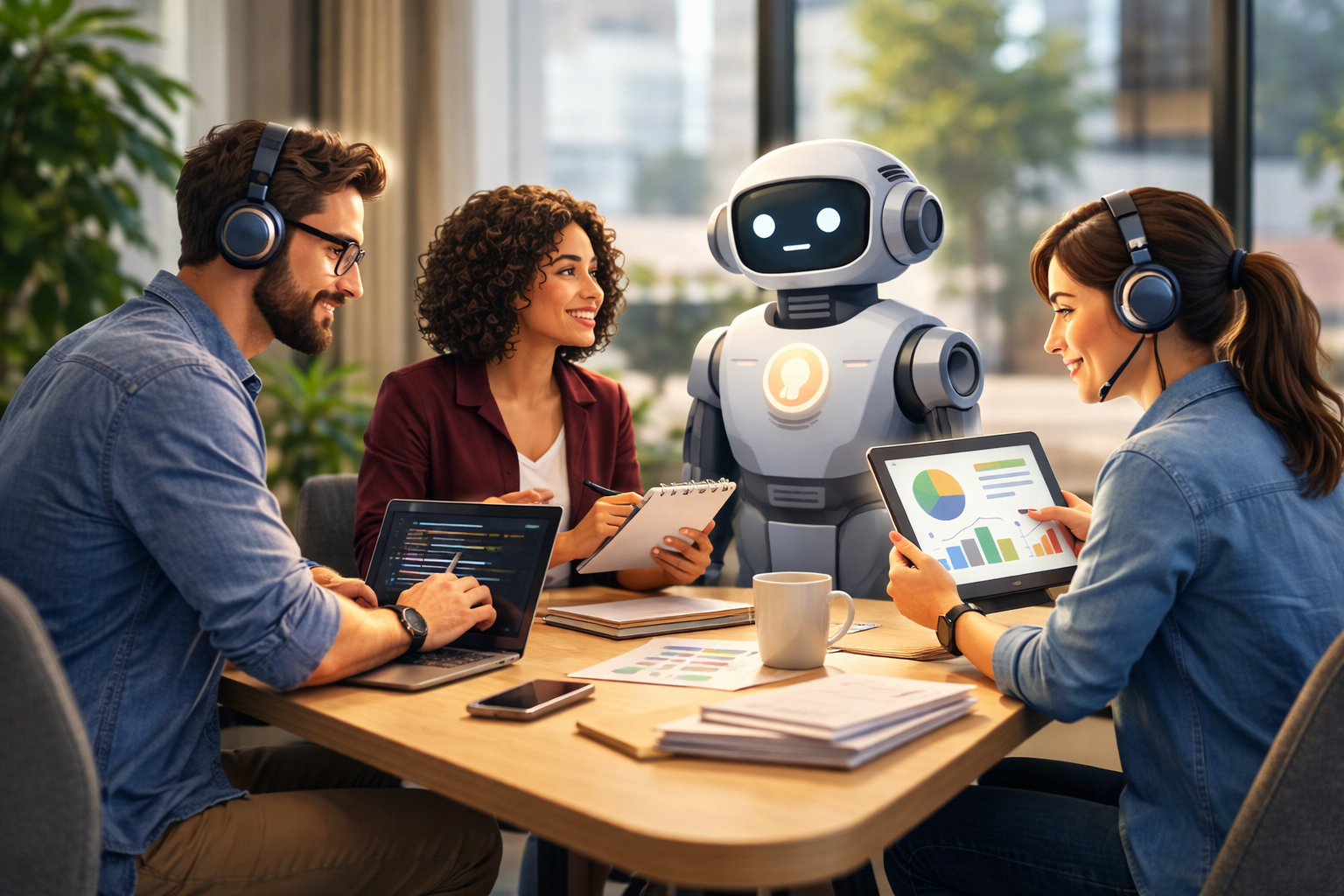
The shift from traditional software to AI-driven systems will have profound implications for developers, businesses, and the global workforce. For software engineers, the role is evolving rather than disappearing. Instead of spending most of their time writing repetitive code, developers will increasingly focus on system architecture, data pipelines, AI integration, security, and performance optimization. Tools powered by AI will act as collaborators that accelerate development rather than replace human expertise.
For businesses, the message is clear: companies that learn to integrate artificial intelligence into their products and operations will gain a significant competitive advantage. Organizations that rely solely on traditional software without incorporating AI capabilities risk falling behind competitors that can automate decision-making, personalize services, and extract insights from large volumes of data in real time.
The nature of digital products is also changing. In the past, software was built around fixed features that rarely changed after release. In the AI era, products will continuously evolve as they learn from user interactions and new data. Applications will become more personalized, adaptive, and predictive, often anticipating what users need before they explicitly request it.
This transformation will also reshape many professions beyond software engineering. Writers, designers, analysts, marketers, and researchers are already using AI tools to enhance productivity and creativity. Rather than replacing human talent, AI is increasingly becoming a powerful amplifier of human capability, allowing individuals and small teams to accomplish work that once required entire departments.
Ultimately, the rise of artificial intelligence represents the next major computing paradigm. Software once revolutionized industries by digitizing processes and connecting the world through platforms. Now AI is transforming software itself, turning static programs into intelligent systems that can reason, learn, and collaborate with humans.
The statement that “software is eating the world” captured one of the most important technological shifts of the past two decades. Today, a new chapter is unfolding: AI is eating software, and the organizations that understand and embrace this transformation will help shape the future of technology.

Leave a comment
Your email address will not be published. Required fields are marked *